Growth & Community
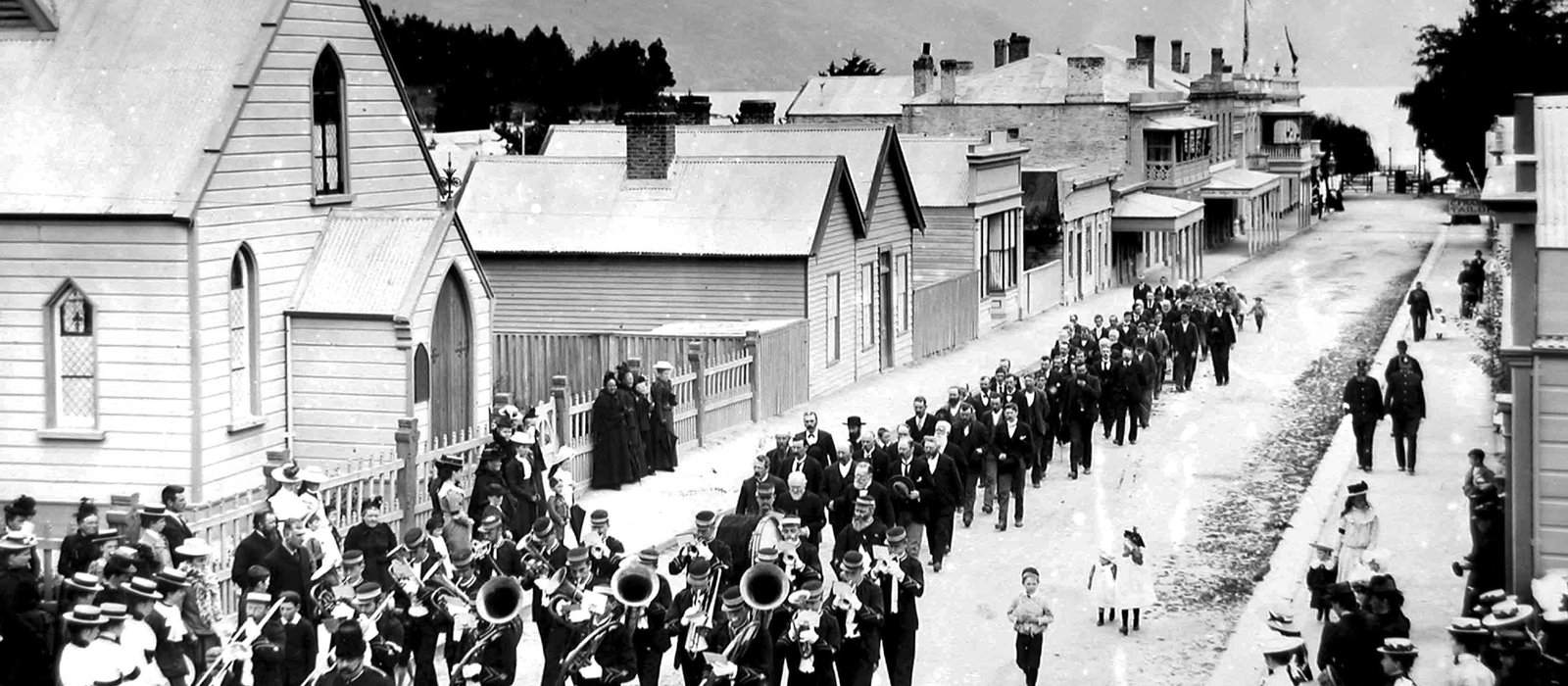
Before the goldrush the population of the district was about 20 people on Rees’s sheep station.16 The influx of miners meant that facilities for an entire community had to be set up very fast from scratch: sources of food and equipment, shops, services, law, and soon schools and churches.
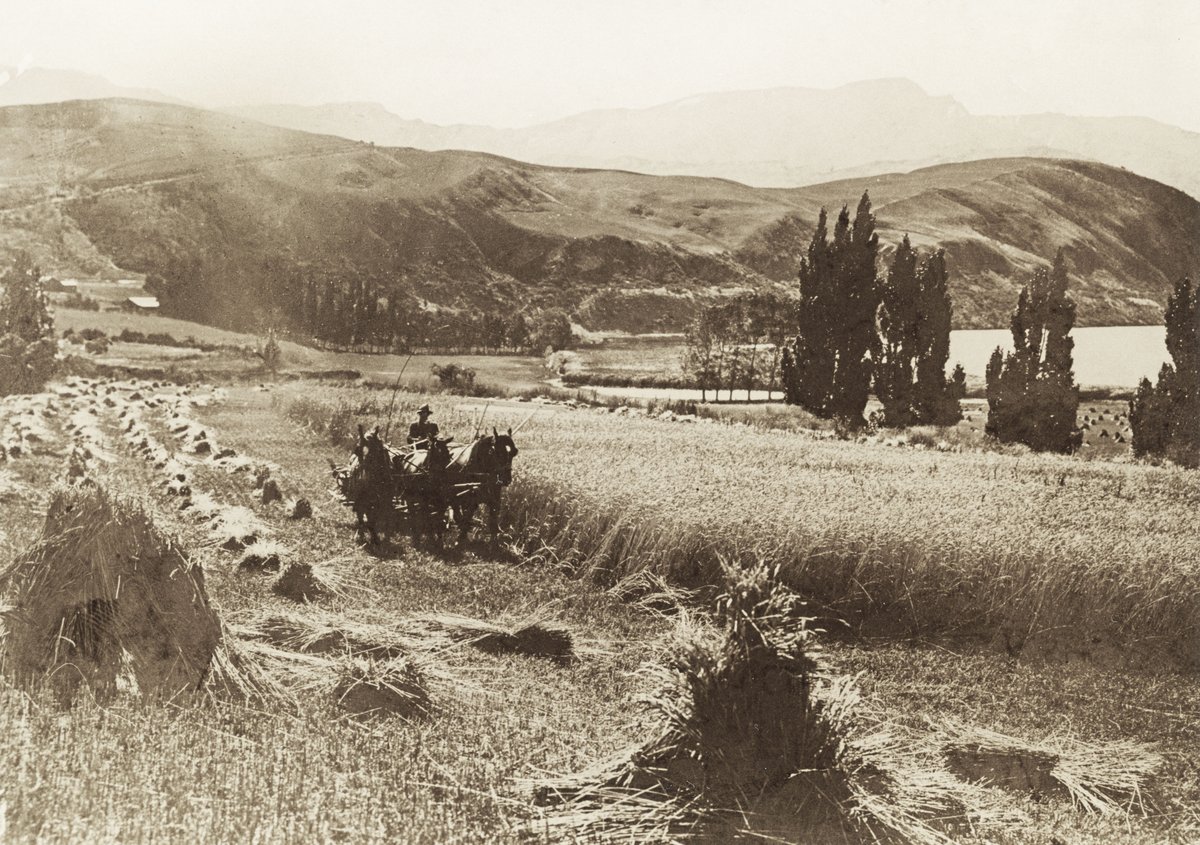
Farming. When the crowds arrived at the goldfields they had to be fed. Rees provided mutton, but mixed farming was needed. The flats between the Lower Shotover and Lake Hayes were surveyed for subdivision in 1864.1 Farms of various sizes were created, among the largest of which were Ayrburn, Mill Farm and Threepwood.11718 A new Threepwood homestead built at Lake Hayes in 1909 was lit by acetylene gas before the town had any.1
Rabbits, introduced for sport and food, became the scourge of all farming.219 A first pair was seen near the Mt Nicholas shearing shed in the early 1870s and delighted the workers, but two years later the place was overrun.2 They forced John Butement of Avalon (later named Threepwood) at Lake Hayes to surrender his leases to the Crown in 1887,1 and they became a trade of their own: 104,000 skins pressed in one winter off one high-country station.2
Dry summers restricted the food harvests and irrigation was slow to arrive. In 1908 the County asked the government for £10,000 for irrigation on the Arrow Flat, and was refused,3 a private scheme at Threepwood opened about 1911,3 and by 1914 a public scheme looked close before the war shelved it.3
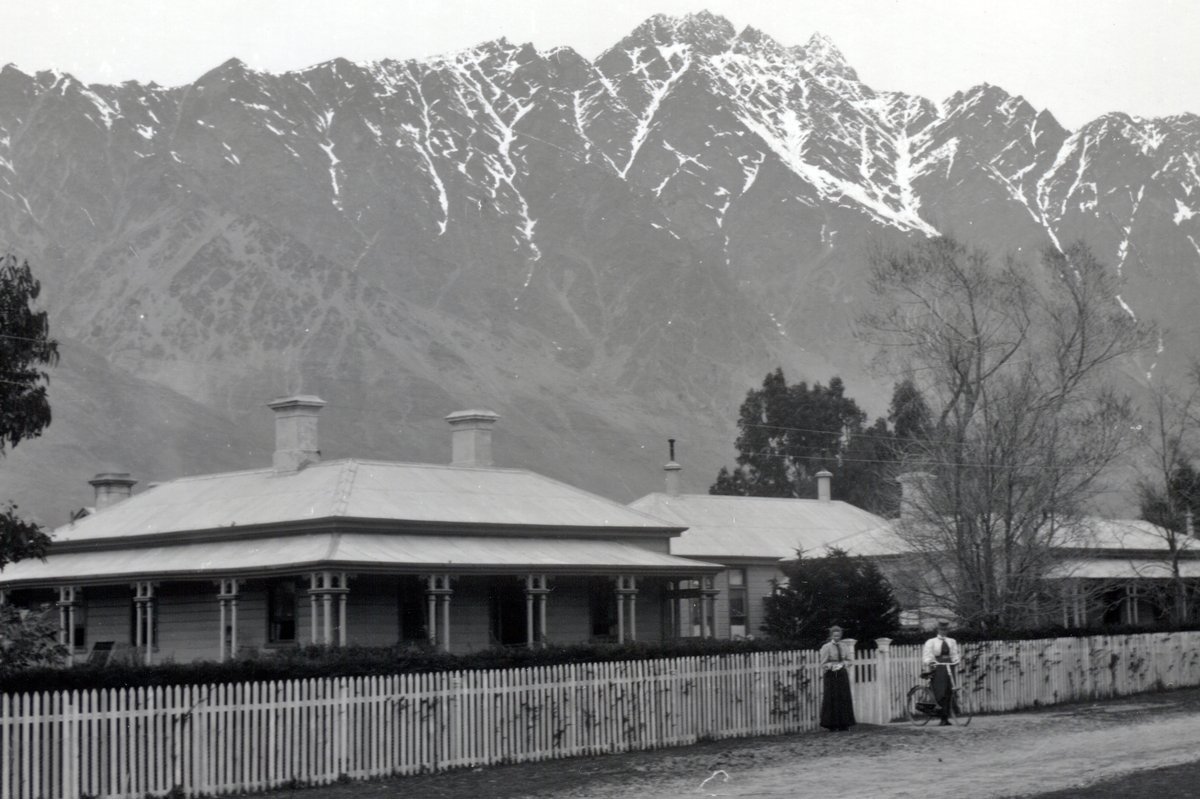
Medical services were needed. Doctors came with the goldrush.4 The district’s hospital was opened in Frankton (where it still is) in 1863;5 Arrowtown opened its own on New Year’s Day 1880 and closed it in 1914.6 One of the longstanding doctors was John Bell Thomson at Arrowtown, who spent twenty-one years in the residence built beside the hospital.67 In 1912 he obtained a licence for the first private car in the county, and the noise of it in the main street emptied the bars.7
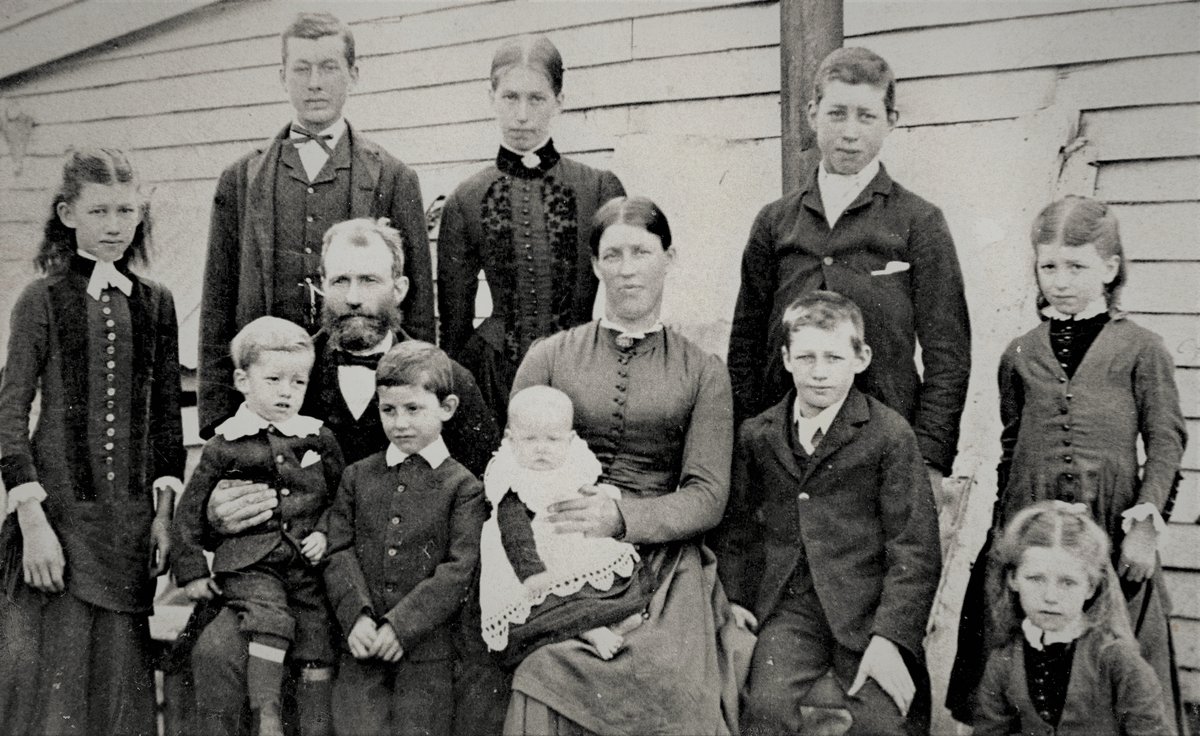
Women and children. The miners were young men. But as some families and more women arrived, children were born. Births, often many in a family, took place at home, attended by other women and sometimes doctors.8
Schools were established throughout the goldfields.9
World War 1 and the influenza pandemic. The toll of the war was high.10 Eighteen names of the casualties are inscribed on the Arrowtown memorial, and 65 or more men from the Whakatipu died, thought to be about one in three of those who served.10 With peace came influenza. Schools, churches, banks and hotel bars closed, the local bodies asked for a cordon round the district and were refused, and three people died here, all infected elsewhere.11
Electricity in Queenstown. Bullendale had hydro-electricity driving a stamper battery in 1886,12 thirty-eight years before the town had a reticulated supply.13 Queenstown made do with an acetylene gas plant from 1910, and after the gasworks blew up it used kerosene lamps until the borough’s One Mile scheme came into operation on 18 September 1924.1214
Kawarau Falls Dam Bridge. This failed gold-mining scheme provided a valuable bridge opened in August 1926 before 2,000 people.15
Two stories go further into it: Arrowtown at war, and the dam that left the district a bridge.
Stories from this era
Sources
- 'History of Threepwood Farm, Ladies Mile, Lake Hayes, to 1910, by Jennie Henderson', Queenstown Courier No. 110, p. 4-8 (index)
- 'The Rabbit 'Nuisance' in the Whakatipu, compiled by Marion Borrell', Queenstown Courier No. 110, p. 16-17 (index)
- 'The Arrow Irrigation Scheme, Origins and Continuation, by Marion Borrell', Queenstown Courier No. 105, p. 18-19 (index)
- 'Call the Doctor! Early Medical Practice in the Wakatipu, by Danny Knudson', Queenstown Courier No. 89, p. 12 (index)
- 'Lakes District Hospitals, Frankton, calendar talk by Ralph Hanan', Queenstown Courier No. 93, p. 6-7 (index)
- 'The History of the Arrow Doctor's Residence built in 1895, compiled by Marion Borrell', Queenstown Courier No. 109, p. 4-5 (index)
- 'Dr John Bell Thomson and Family in Arrowtown 1894 to 1914, mainly by Patricia Rainey', Queenstown Courier No. 109, p. 7-9 (index)
- 'Childbirth in Earlier Times, by Marion Borrell', Queenstown Courier No. 101, p. 13-14 (index)
- 'First Schools in the Wakatipu Established in a Rush, by Danny Knudson', Queenstown Courier No. 77, p. 14 (index)
- 'Arrowtown District during World War 1, by Denise Heckler', Queenstown Courier No. 114, p. 21-25 (index)
- 'The 1918 'Spanish' Influenza in the Wakatipu, compiled by Marion Borrell', Queenstown Courier No. 101, p. 17-19 (index)
- 'Lighting Up Queenstown, by Alan De La Mare', Queenstown Courier No. 80, p. 12-13 (index)
- 'The Bullendale Dynamo Powerhouse, Pioneering Electricity, by Marion Borrell', Queenstown Courier No. 108, p. 24 (index)
- 'Queenstown Borough Council's Hydro-Electricity Supply, from the Otago Daily Times, 18 September 1924', Queenstown Courier No. 47, p. 7 (index)
- 'Centenary of the Kawarau Falls Dam Bridge (1926), compiled by Marion Borrell', Queenstown Courier No. 115, p. 6-14 (index)
- 'Alfred H. Duncan: Cadet Shepherd and Chronicler, by Marion Borrell', Queenstown Courier No. 109, p. 16 (index)
- 'Ingenuity, Industry and Quiet Enterprise: John and Peter Butel, by Pauline Lawrence', Queenstown Courier No. 107, p. 4 (index)
- 'History of Threepwood Farm Part 2, 1912 to 1940, The Leo Lee Years, by Marion Borrell and others', Queenstown Courier No. 112, p. 21 (index)
- 'More Local Rabbit Tales, from various sources', Queenstown Courier No. 111, p. 31 (index)