The district at war, 1939 to 1945
A town of eight hundred
Queenstown in the 1930s was “a small, ‘quiet summer resort’ of around 800 permanent residents”.1 Visitors came for “the six, short weeks of the tourist season”, travelling “firstly on the Kingston flyer, then on the steam ships on Lake Wakatipu”, and “visitors from overseas were few”.1
Who went to war
About a hundred young Queenstown men volunteered to fight overseas in the 23rd Battalion and were given large send-offs.1
On the Frankton flats, June Thompson’s brothers “were called up and went away to camp”.2 For Lizzie White, a First World War spinster, the second war brought back memories of the first. She had qualified as a maternity nurse in 1926 and ran a nursing home in the cottage at Lake Hayes. Women from the Arrow Irrigation Scheme camps came to her there.3 She watched three nephews go to war. Her sister’s husband died in 1941 with the boys away and a farm and orchard to keep going.3
Manpowered
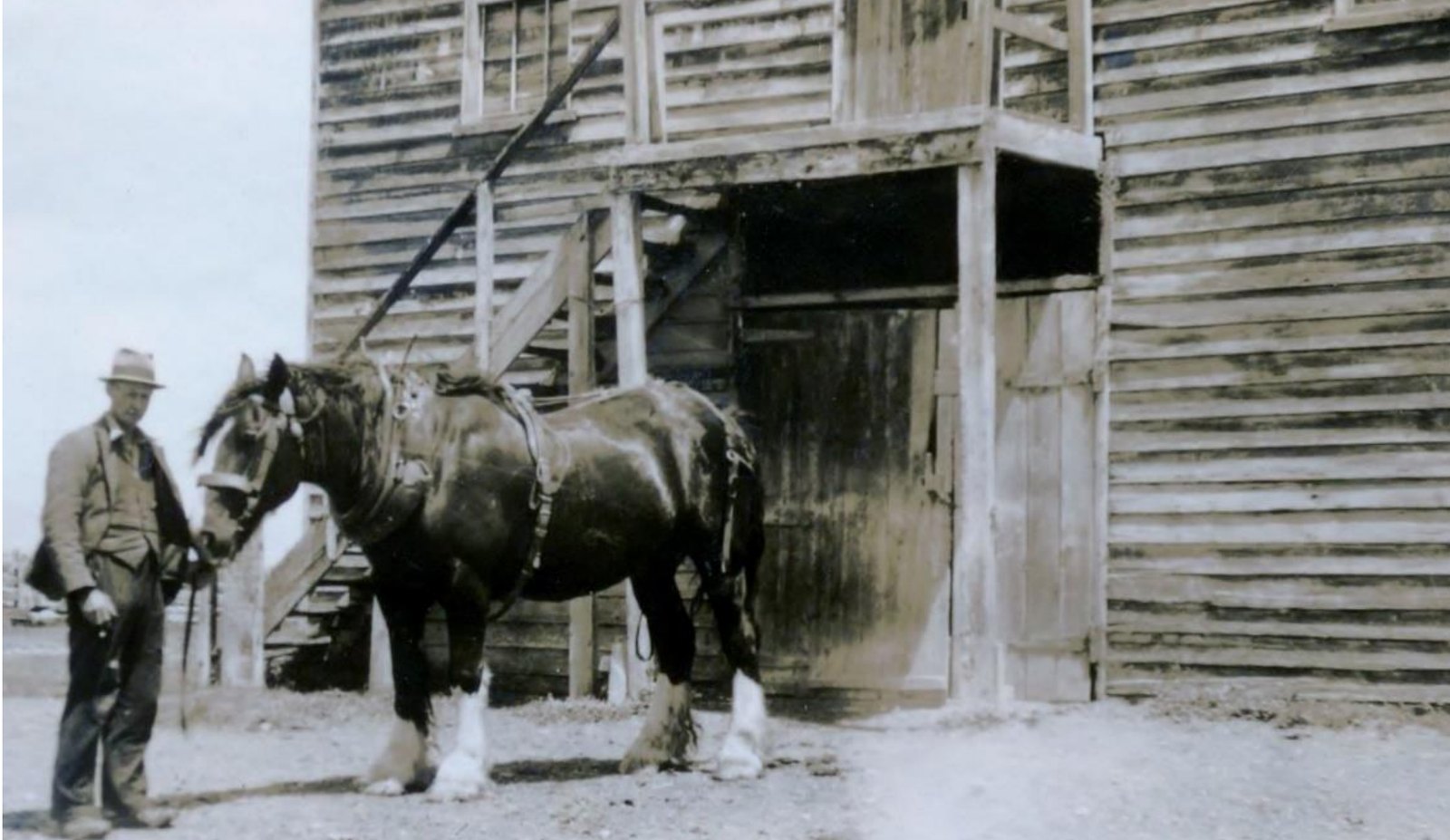
“Both men and women were ‘manpowered’ into jobs where they were needed.”1 Here it showed up on the farms, where a women’s division of the New Zealand Farmers Union was needed to help run them,1 and in one line of clothing: Mrs Lel Luckie began to wear slacks for the first time.1
June Thompson left school at 16 to work with her father because there was nobody else, and when she was called up at 18 she was told to stay where she was: “Seeing I was working on the farm, they said, ‘You’ve got to stay there.’”2 The paddocks changed too. “We were told to plant linum which had a beautiful blue flower, and the seed was used to make linseed oil during the war.”2
At the head of the lake the war put gold miners into scheelite mining: Darrell McGregor, who contracted there in 1952, describes two brothers, “ex-gold miners who had gone to Glenorchy during the war”, one of whom had managed the State Mine on Mt Judah for a time.4
Coronet Peak had employed an Austrian instructor, Otto Santner, in 1939.5 When war was declared, Paddy Strain told the Society, “the local policeman was meant to arrest him as an enemy alien”, and the Southland Ski Club “managed to get him on a boat leaving from Bluff for South America”.5
The coupons
Rationing of food and petrol mattered here because the district’s main income was from visitors.1 Petrol was rationed from 1939 and continued “with only one short break until 1946”, and from 1942 to 1945 a private car got one coupon a month, worth a gallon or two.1 Col. Alex Robins, who came home to it, put the result in a line: “It had a big effect on quietening the town.”1 A 100-mile limit on travellers in the later stages of the war did the rest.1
Emergency Rationing Restrictions came in on 27 April 1942 and the first ration books in New Zealand were issued.1 The district ate better than most, being able to grow its own vegetables, and people gave “surplus coupons to a neighbour in need”.1 When the Girls Sports Club could not get uniforms for a tournament at Winton, “the girls instead made their own uniforms from tea towel material, which was not rationed”.1
The Home Front
A Home Guard of “approximately 20-30 men” was formed and trained by soldiers, and a women’s branch of the Women’s War Service Auxiliary drilled once a week “with mock parades in what is now the Mall”.1 Next to the police station was a dugout used for air raid practice, and a survey counted how many spare rooms each house in Queenstown had, for future refugees.1 Even so, “Queenstown people appeared much more concerned about the threat to their men fighting overseas than the threat to themselves”.1
What the peace did
Returning servicemen and their wives received discounted travel passes, and an estimated half of the visitors afterwards were those couples, mainly from the North Island.1 Queenstown was “no longer a ‘quiet little village’”.1 The war took its time letting go: tea rationing stopped in 1948 and petrol rationing lasted until 1950.1 On the farm the change arrived as a machine: “After the war we were able to get a tractor. They weren’t making them during the war.”2 The horses were retired or sold.2
More from Changing Times
Sources
- 'The Effects of World War II on Queenstown, looking at before, during and after the war period 1939-45, by Denise MacMillan', Queenstown Courier No. 44, p. 3-9 (index)
- 'Growing up at Antrim/Arranmore Farm, Frankton Flats, June Thompson nee Hansen, interviewed in January 2018', Queenstown Courier No. 102, p. 25-27 (index)
- 'Elizabeth Margaret White 1878-1961, Nurse Lizzie White, Lake Hayes, monologue by Marion Borrell', Queenstown Courier No. 115, p. 30-31 (index)
- 'Scheelite, The Rock That Shines, by Darrell McGregor', Queenstown Courier No. 70, p. 16 (index)
- 'Memories of Early Skiing on Coronet Peak, by Paddy Strain', Queenstown Courier No. 91, p. 25 (index)