The Kingston road
The road nobody wanted to pay for
A road from Kingston to Queenstown “was first suggested in the 1870s, but nothing tangible was started”.1 What made it look possible was the dam at the Kawarau: in September 1926 Cr W.H. Overton put it to the Queenstown Borough Council that a road be formed via the newly completed dam, and in April 1927 the Government approved work between the dam and Wye Creek.1
The objections were about boats and money. The Railways Department, which ran the Earnslaw for the Government, “considered that there would be no prospect of having an additional steamer” if a road took the traffic.1 Lake County members “got cold feet at the thought of road maintenance costs becoming a burden on their budget”.1
Picks and wheelbarrows
The method was chosen for the men rather than for the road. The intention was to “swarm the project with men who would engage in laborious pick and wheelbarrow work”.1 Gangs of up to 105 men formed the road from the Kawarau Falls Dam as far as Wye Creek.1
Then it stopped. The Government halted the project and paid the men off in September 1929.1 What unlocked it was the maintenance bill: in September 1933 the Main Highway Board gave a reassurance that the road would be declared a main highway, and from August 1934 the Government approved large teams to restart from the Kingston end.1 The worst mile was the Devil’s Staircase, where 30,000 cubic yards of rock came out at a cost of £12,000, about a sixth of the whole road.1
The camps
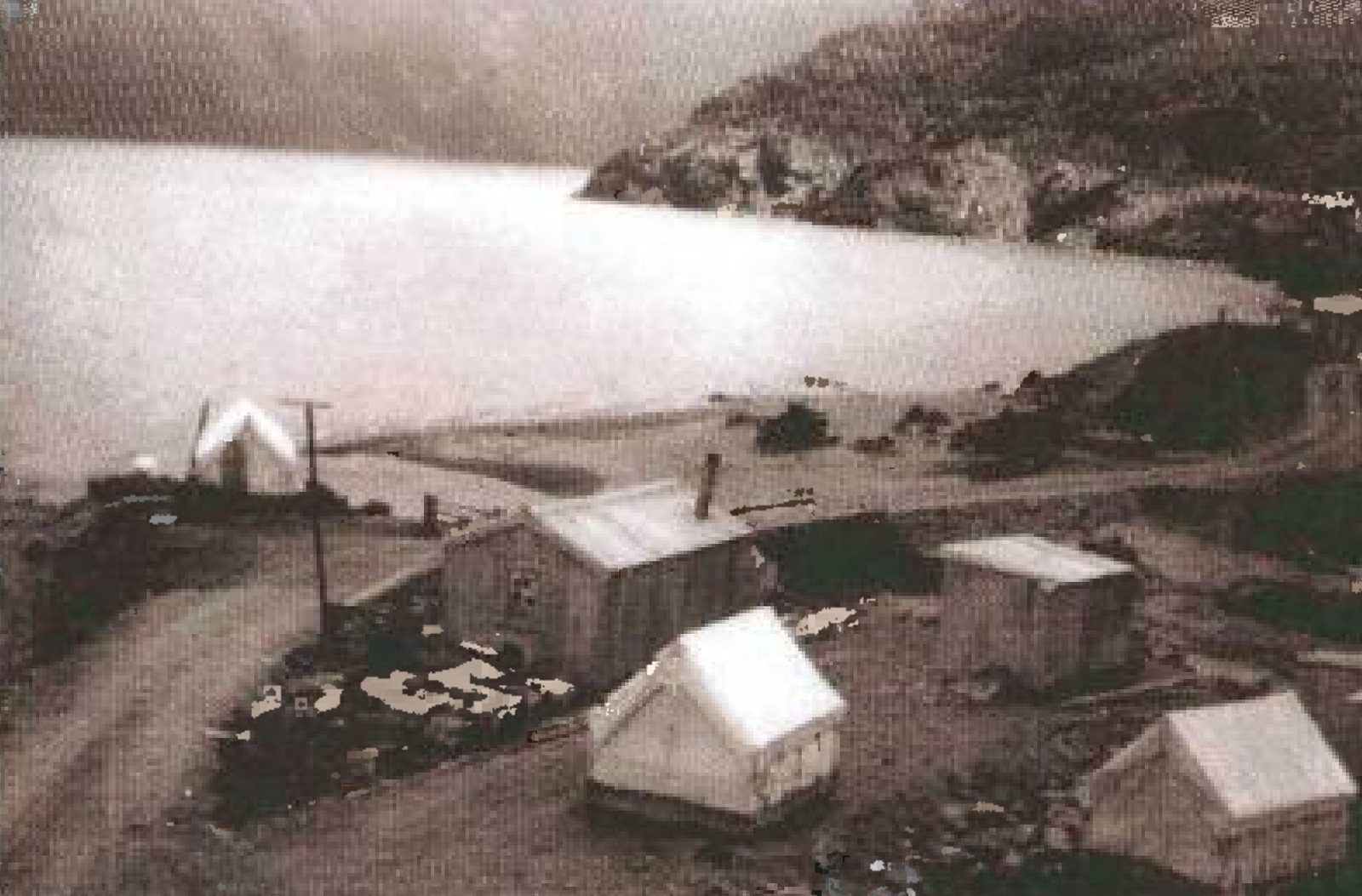
Most of the workers came from Invercargill and lived in encampments of tents and huts.3 Joan Cooke grew up beside the Kingston end of the work, and her first memory of the road being built was “seeing the Teraki family coming with all their little children to get milk”.2 At the Bottom Camp the billies were filled “at twopence a pint, or fourpence a quart”, and every transaction was written in a notebook.2
She went to afternoon tea in one of the tents. “The tent had a wooden floor, and a sparse framework for the canvas sides and roof, all there was to keep out the elements.”2 Many of the men were “well-educated people working on the road, as one of the few opportunities they had during the Depression”.2 At the Kawarau end, Doctor Bill Anderson made frequent trips to attend to medical needs, and on Saturday nights the men and their families came in to the Queenstown council building, where locals served them tea and scones.3
There were enough children for a school, built at the top of the rise on the Kingston side of the Staircase Creek, which stayed open two years.2 One December, 1934 or 1935, Father Christmas managed a visit to it.2
Saturday 4 April 1936
The Lake Wakatip Mail of 7 April called it a “District Red Letter Day” with “Fine Weather and Record Crowd”.1 People went down to Kingston by railway omnibus, motor car and motor cycle, and “a stream of cars from Invercargill, Dunedin, and indeed, all parts of the province, was pouring into the lakeside township”.1 Mrs Leo Lee, wife of the county chairman, cut the scarlet ribbon and the cavalcade moved off to the Kawarau end for the ceremony.1 The district engineer told the crowd that forming the 23.5 miles had cost £63,000 to date.1 W.A. Bodkin declared the road open, “nine years after construction had commenced”.1
Joan Cooke watched it from the hillside above where the Bottom Camp had been. “I remember well one autumn day when I was four, seeing dozens of cars, travelling close together,” she wrote: black canvas-sided ones, square-built grey ones and one vivid orange tourer, with dust drifting across the bracken as they chattered past.2 There had been a ceremony down at Kingston, “but we didn’t have enough good clothes to go there”.2 She did not mind missing the new bridge either. She had already been over it in Jimmy McLean’s grey truck, “the first vehicle to do so”.2
What it left
Some of the camp buildings outlived the job. A crib at the Lakeview camping ground called ‘Glengeddes’ was two army huts put together, bought from the Public Works Department “which had constructed the road from Kingston to Frankton”.4
The TSS Earnslaw lost passengers from Kingston.5 She continued to be the lifeline for the sheep runs round the lake.5 By then she was mostly on short pleasure cruises.5
More from Changing Times
Sources
- 'Bluff, Sweat and Tears, The Story of the Kingston Road, by Danny Knudson', Queenstown Courier No. 84, p. 18-23 (index)
- 'Memories of the Kingston Road, by Joan Cooke', Queenstown Courier No. 85, p. 21-23 (index)
- 'The Great Depression in the Wakatipu, 1929 to 1938, by Andrea King, written in 1989 when at Wakatipu High School', Queenstown Courier No. 105, p. 14-15 (index)
- 'Childhood Holidays at Our Crib, 'Glengeddes', in the 1940s and 1950s, by Sue Simms nee Geddes', Queenstown Courier No. 103, p. 25 (index)
- 'The T.S.S. 'Earnslaw' of Lake Wakatipu, by Thos. Davidson', Queenstown Courier No. 11, p. 12-14 (index)